Welcome offer: 10% off on your first order with code "SVAMART10" X
Decoding craft philosophy

From Waste to Worth : The Quiet Intelligence of Paper Mâché

By Roshan yaduvanshi 6 Views Apr 04, 2026
From Waste to Worth : The Quiet Intelligence of Paper Mâché

In most consumption systems, value is assigned at the beginning. Materials are categorized, priced and positioned before they are transformed into products. Some materials are considered premium. Others are treated as disposable. Paper usually belongs to the second category. It is lightweight, inexpensive and often short-lived. It is used, folded, printed on and eventually discarded. In economic terms, it is rarely associated with durability or long-term value. Paper Mâché challenges this assumption.


Rethinking Waste

At its core, Paper Mâché begins with what is already used. Discarded paper is collected, softened, layered and reshaped into objects that hold both form and function. The material does not change in origin. What changes is perception. “Waste is rarely a material problem. It is a perception problem.” The same paper that is thrown away in one context becomes a crafted object in another. This shift is not accidental. It is guided by process, skill and time. Paper Mâché demonstrates that value is not inherent in the material itself. It is constructed through transformation.


The Role of Process

Unlike industrial systems where material cost often dominates pricing, Paper Mâché reverses the equation. The raw material remains inexpensive, but the process becomes intensive. Layers are built gradually. Each stage requires drying, shaping and refinement. Surface work involves intricate detailing, often done by hand. Painting and finishing demand precision and patience. Yahan cost material me nahi, samay aur skill me hota hai. “Cheap material does not create a cheap product.

Shallow process does.” This distinction is important. It challenges the common assumption that price should directly reflect material cost. In crafts like Paper Mâché, value emerges from effort, not input alone.


Fragility and Strength

Paper is often associated with fragility. It tears easily, absorbs moisture and lacks structural strength in its basic form. Yet when processed through layering and binding, it gains durability. Properly crafted Paper Mâché objects can last for decades, retaining both form and detail. This creates an interesting contradiction. What appears weak in isolation becomes strong through process. “Strength is not always a property of material. It is often a result of structure.” This idea extends beyond craft. It reflects a broader principle that transformation can alter not only form, but also perceived capability.

Craft, Culture and Continuity

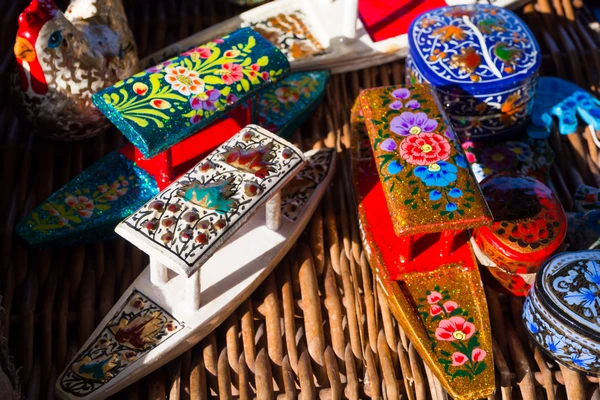
In regions like Kashmir, Paper Mâché has evolved into a refined art form. Artisans have developed techniques of naqashi (hand-painting) that transform simple forms into detailed decorative objects. The craft reflects a blend of cultural influences and local adaptation. Over time, it has become both an artistic expression and a source of livelihood. However, like many traditional crafts, it operates within changing market dynamics. As mass-produced alternatives increase in availability, time-intensive processes face pricing pressure. This brings the conversation back to perception.

The Value Question

If a material that is commonly discarded can be transformed into something valuable, then the definition of value itself becomes fluid. Are we evaluating products based on what they are made of, or how they are made? Are we measuring worth through material cost, or through human effort and process depth? Paper Mâché does not just produce objects. It raises questions.

“Value is not always in the material, Sometimes, it is in the way we choose to see it.”

Beyond the Object

The significance of Paper Mâché lies not only in its sustainability or craftsmanship, but in its ability to reframe thinking. It suggests that materials, like ideas, are not fixed in meaning. They evolve through context, skill and intention. Ek simple sa kagaz, jab process se guzarta hai, toh uski pehchaan badal jaati hai. Perhaps the same applies to how we view products, systems and even people Because sometimes, what we call waste is simply value waiting to be understood differently.

Share Now

Download application to explore more

Bringing art into lifestyle