
Your cart is empty, and it looks like you haven’t added anything yet.
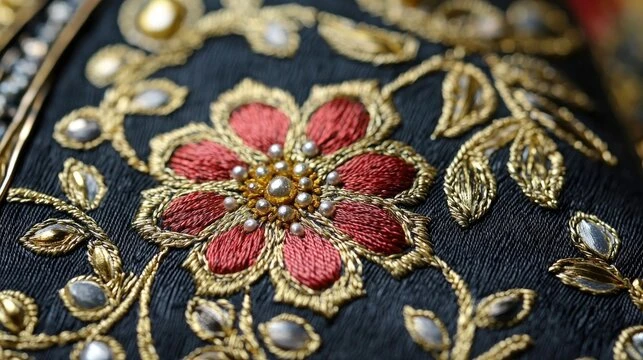
Zardozi is instantly recognisable for its richness metallic threads, dense surfaces, and an unmistakable regal presence. Gold and silver embroidery catches light and signals celebration. But this beauty is not effortless. Zardozi was never meant to be light, delicate, or casual. It was meant to carry weight, both literally and symbolically. The heaviness of the material is not excess; it is intent.
Historically rooted in royal courts during the Mughal era, Zardozi found a strong home in Uttar Pradesh, particularly Lucknow. These garments were ceremonial, meant for moments of significance, not daily convenience. The weight of the embroidery mirrored the weight of the occasion. Beauty here was not casual display; it was composure under load.
Zardozi ki khoobsurti uski chamak mein nahi, uski gambhirata mein thi.
The making of Zardozi is physically demanding. Fabric is stretched tightly over a frame, and artisans work in fixed postures for long hours. Metallic threads resist movement. Every stitch requires controlled force. Unlike lighter embroidery forms, Zardozi does not forgive haste. A single mistake can distort the fabric or ruin days of labour. This process does more than create ornamentation. It shapes the artisan’s temperament. Speed becomes impossible. Aggression becomes harmful. The body learns steadiness. The mind learns patience. Over time, the maker develops the ability to hold pressure without panic.Zardozi trains discipline not through instruction, but through resistance. The material itself teaches restraint.
Weight here is not a problem to eliminate. Weight is a condition to manage.
Zardozi reflects an indigenous understanding of life that modern systems often ignore. Not all weight can be avoided. Some responsibilities are inherently heavy emotional, social, or moral. The wisdom lies not in escaping them, but in learning how to carry them without collapsing. Modern systems treat heaviness as inefficiency. Comfort and speed are prioritized. Zardozi rejects this logic. It accepts that certain forms of beauty, dignity, and meaning require time, strain, and presence. Grace, in this context, is not lightness. It is balance maintained under pressure. Zardozi remains relevant today not because it looks royal, but because it teaches something essential: how to remain composed while carrying weight. That lesson extends far beyond fabric. Zardozi does not teach decoration.It teaches discipline under load. Aaj hum weight se bachna seekhte hain, isliye pressure mein tikna bhool gaye hain.
Zardozi feels deeply relevant today because modern life is filled with invisible weight deadlines, expectations, emotional labour, constant urgency. Yet we are trained to escape weight, outsource it, or rush past it. Zardozi offers a different lesson: some weight cannot be avoided. It must be carried well.
The craft reminds us that discipline is not rigidity. It is balance maintained under strain. Beauty that emerges from Zardozi is not effortless. It is composed. It holds itself together.
At Svamart, Material Matters is informed by this indigenous intelligence. Zardozi shows that materials shape behaviour. Heavy materials demand patience. Dense processes demand steadiness. And when systems are built around discipline rather than speed, quality becomes inevitable.
You need to Sign in to view this feature
This address will be removed from this list