
Your cart is empty, and it looks like you haven’t added anything yet.
Understanding Price, Value, and the Systems We Quietly Accept
In today’s marketplace, we treat price as truth.
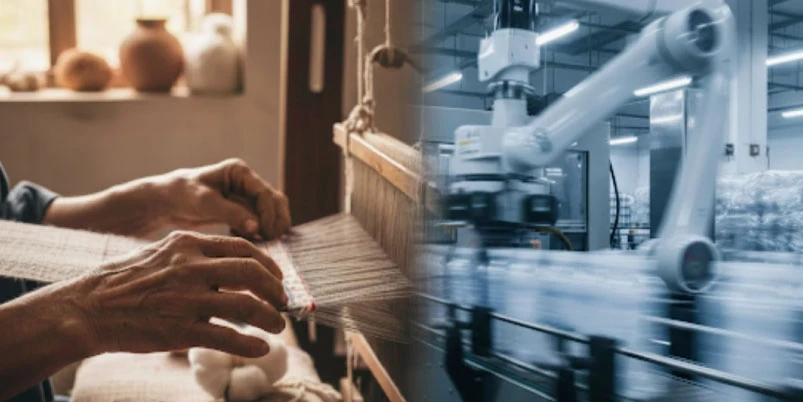
If something is expensive, we assume it demands too much. If something is cheap, we assume it is efficient, innovative, or generous. But price is not truth. Price is a decision. Handmade products are labelled expensive because they reveal their cost honestly. Machine-made products appear cheap because their real costs are carefully hidden, shifted, or delayed. This is not an argument against machines or progress. It is a question about what our systems choose to count and what they choose to ignore.
Price Is Visible. Cost Is Distributed
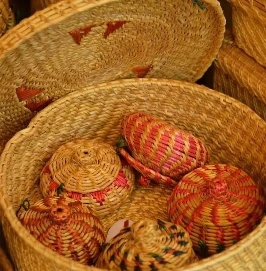
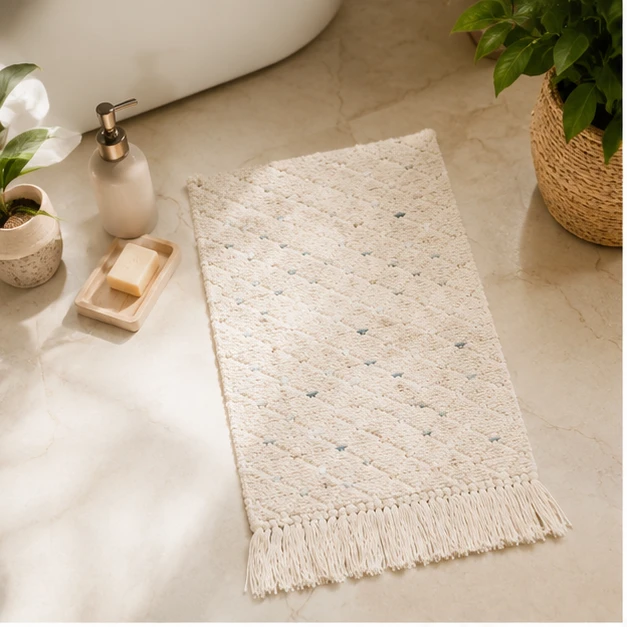
When you pay for something handmade, you are paying for time that cannot be compressed, skill that took years to mature, materials that obey natural limits, and a pace of production that follows human rhythm rather than factory schedules. Nothing is abstract. Nothing is postponed. With machine-made goods, the transaction feels lighter because the heavier costs are removed from sight. Environmental damage, energy dependence, waste accumulation, and labour vulnerability are rarely reflected in the final price. These costs do not disappear; they are simply displaced into ecosystems, communities, and the future.
Handmade pays now. Industrial systems pay later and make others carry the burden.
Why Handmade Feels Expensive in a Fast World Handmade feels expensive not because it costs too much, but because it refuses to move at industrial speed. We have been trained to expect instant availability, uniform perfection, and endless supply. Handmade resists all three.
It accepts variation. It respects pauses. It acknowledges limits.In a system designed for acceleration, anything that honours human pace feels like friction. And we mistake friction for inefficiency.Machine-made products are not affordable by design alone. They are affordable because entire systems silently support them cheap energy, extractive materials, disposable logistics, and social tolerance for waste. These supports rarely appear on invoices, but they shape every object we touch.This is not efficiency , This is selective accounting.
What Cheap Objects Teach Us And What Handmade Preserves
Cheap objects train us to care less. When something is easily replaced, it is rarely repaired. When something carries no visible effort, it invites no attachment. Over time, disposability stops being a habit and becomes a mindset. We throw away easily what was designed to be forgotten. Handmade objects behave differently. Their imperfections remind us of human presence. Their ageing feels like character, not decay. They ask for care without demanding it.
Handmade is often dismissed as inefficient, but this comparison is misleading. Machines are efficient at producing volume. Handmade is efficient at preserving skill, continuity, and cultural memory. One system optimizes output. The other sustains identity.Calling handmade inefficient is like calling conversation inefficient compared to automated replies. The metric is correct. The meaning is lost.
The Real Question We Avoid Asking
Low prices feel like savings, but they are rarely free. They are payments postponed passed on to polluted landscapes, eroded crafts, unstable livelihoods, and future generations who inherit fewer skills and fewer choices. Someone always pays. If not the buyer, then the world around them.The real issue is not why handmade costs more. The real issue is why machine-made systems have been allowed to ignore their true costs for so long.
Svamart does not position handmade as luxury. It treats it as honest production. It reconnects objects with their materials, their makers, and the time they require not to create guilt, but to restore context.Because conscious buying does not begin with restraint , It begins with understanding.
You need to Sign in to view this feature
This address will be removed from this list