
Your cart is empty, and it looks like you haven’t added anything yet.
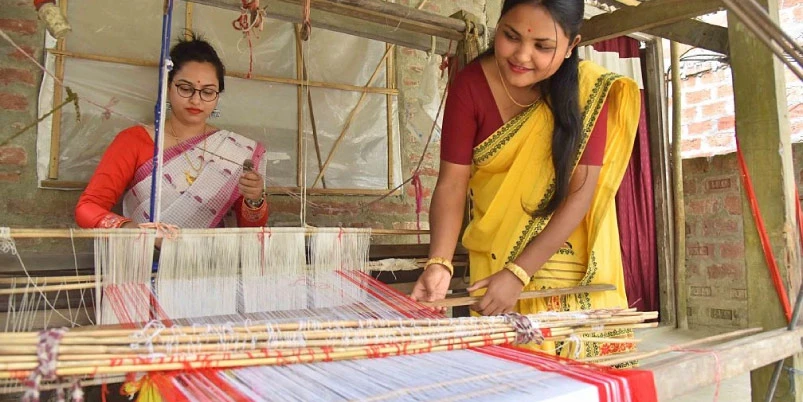
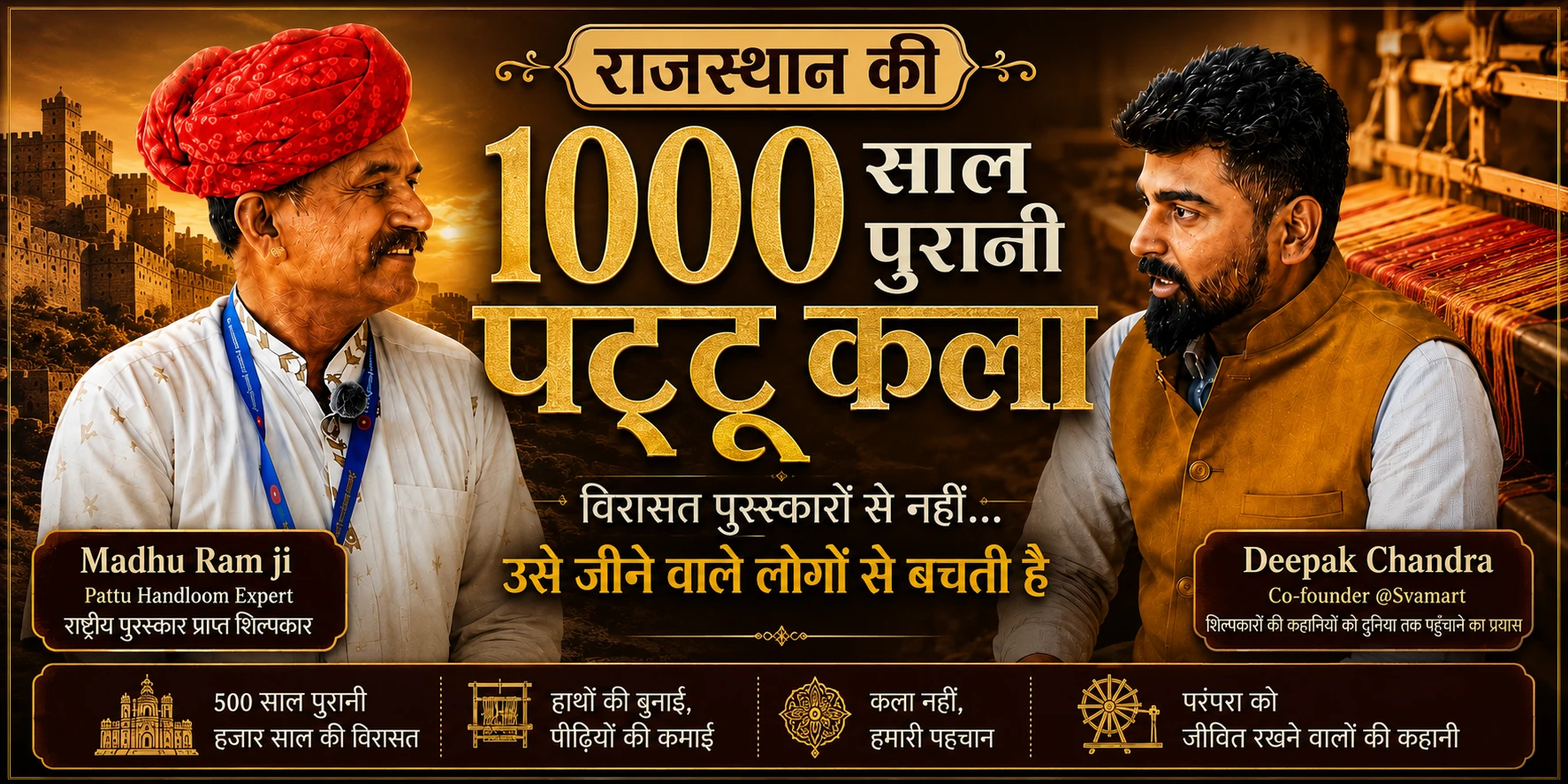
Handloom is often spoken about today as a category sustainable fabric, traditional textile, slow fashion. But these labels flatten its deeper nature. Handloom was never just a method of making cloth. It was a process of alignment between human hands, material behaviour, and time itself. There was no urgency to overcome time, because time was not the enemy. Time was part of the design. The warp and weft of handloom were not only structural elements. They formed a rhythm of breath, attention, and bodily pace. Cloth emerged when the hand was ready, when the mind was present, and when the material allowed it. That is why no two handloom pieces were ever truly identical. Variation was not a flaw; it was proof of presence.
Uniformity was never the goal. Continuity was.
Modern systems measure productivity through speed and output. Handloom measured productivity through appropriateness. How much to weave, when to weave, and for how long were decisions guided by the body and the material, not by the clock. Cotton responded to humidity. Silk demanded patience. Wool followed its own rhythm. The loom was not forced into deadlines; it responded to conditions. Handloom was designed around capacity, not pressure. When the body tired, work paused. When attention broke, rhythm stopped. This was not inefficiency. Yeh intelligence thi, an understanding that quality collapses when rhythm is ignored. Handloom never rejected scale outright. It simply recognized that scale without rhythm destroys relationship between maker and material, effort and outcome.
Speed was not a solution here. Speed was a disturbance.
Handloom reminds us that work is not merely output. Work is a state of alignment. When body, mind, and material move together, objects carry presence. This is why handloom garments are not just worn; they are lived with. They age gradually, invite repair, and accumulate memory.
Modern systems removed rhythm in favour of acceleration. Speed increased, but attention thinned. Volume expanded, but connection weakened. Handloom remains relevant not because it is old, but because it asks a question modern systems avoid: does everything need to move faster?
When rhythm disappears from work,
sustainability becomes an added effort.
At Svamart, Material Matters is rooted in this understanding. Material is not treated as raw input, but as a partner in process. Handloom shows that when systems move at human pace, continuity becomes possible. Skill survives. Care becomes natural. Sustainability stops being a slogan and starts functioning quietly. Perhaps we don’t need more products. Perhaps we need a different pace.
Handloom does not teach us how to weave. It teaches us when to slow down and when to let the process unfold.
You need to Sign in to view this feature
This address will be removed from this list